What’s actually in them
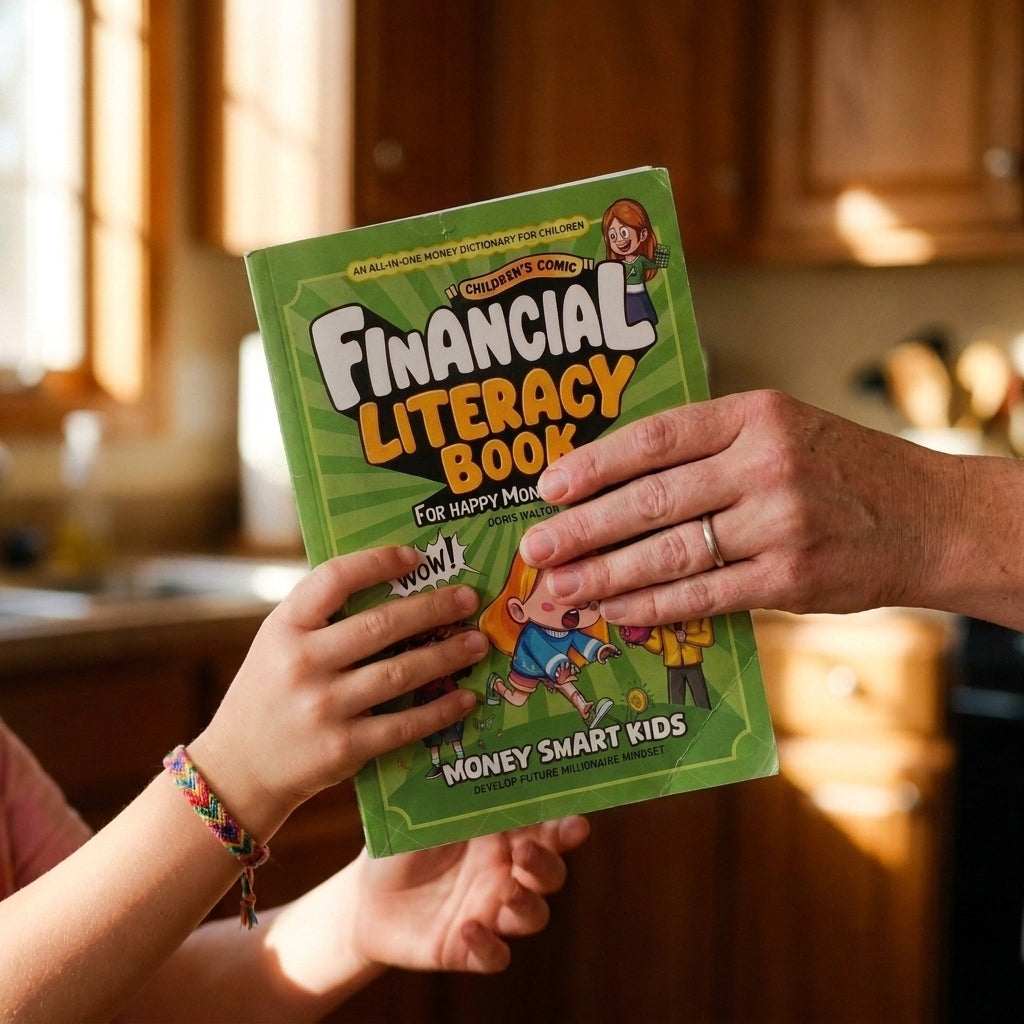
Book one runs 160 pages in full color. Characters earn things, spend them badly, wait, regret, save, and pick one thing over another. Needs against wants, where money comes from, what happens after it’s gone.
Book two is 40 pages of plain economics: interest, compound interest, credit, what a minimum payment is built to do, what putting a little away looks like over thirty years. Also written for a child. That’s the part that catches parents off guard.
Neither one is a workbook. Nothing to fill in, nothing to grade, nothing for you to run.
Why we made this
Nobody was ever going to say it out loud. So we put it in a book.
Most of us learned money the expensive way. An overdraft at twenty-two, a credit card we signed for a free water bottle, a number on a statement we were too scared to add up. Not because our parents were careless, but because nobody handed them the words either. It just got passed down: the gap, and the quiet shame that comes with it.
Therabell exists to end that at the kitchen table, one family at a time. Two books, one purchase, both generations. A story for the kid, and the plain explanation the adult should have gotten at eighteen.

Complete Kids' Financial Literacy Bundle
Two books · 200 pages · Ages 6-12 · Ships free in the US